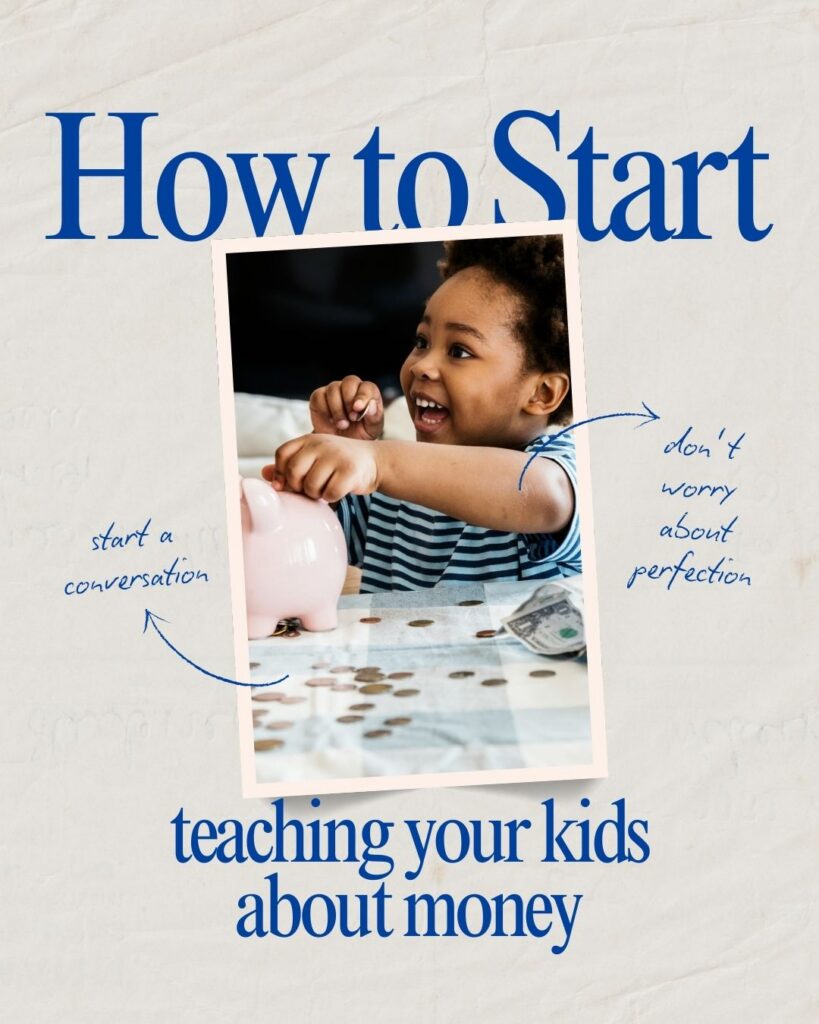
The research on money and kids is consistent: children learn financial habits earlier than most parents realize, and experiential learning cements those habits better than instruction alone. Games — board games, card games, and digital apps — turn financial concepts into practice without it feeling like homework.
This list of games that teach kids about money is organized by age group and format. Each entry includes the core concept it teaches, the format (board game, app, or online), and a note on whether it’s best for family game night or solo play. Free and low-cost options are flagged throughout.
How to use this list: Don’t feel pressure to work through everything. Pick one game that fits your child’s age and your family’s style, play it consistently, and talk about what comes up. The conversation that happens around the game is often more valuable than the game itself.
Ages 4–7: Introducing Money as Real
At this age, the goal is simple: money is real, it’s counted, and it exchanges for things. Games that use physical coins and bills, require basic counting, and reward saving or smart spending are ideal. Abstract concepts like interest or investing come later — for now, the mechanics of transactions are enough.
| Board & Card Games — Ages 4–7 |
| Monopoly Junior 📦 Board Game 👪 Family Game Night 🎯 Spending & Property The junior version of Monopoly is scaled for young kids with simpler rules, lower prices, and amusement park-themed spaces. Players collect rent, pay for landing spots, and manage a small bankroll. It introduces the idea that owning things generates income — a foundational wealth concept — at a scale a five-year-old can manage. |
| The Allowance Game 📦 Board Game 👪 Family Game Night 🎯 Earning & Budgeting Designed for ages 5 and up, The Allowance Game puts kids in charge of earning chores, spending wisely, and saving toward a goal. Unlike Monopoly Junior, it closely mirrors real-world kid finances — there’s no fantasy real estate, just a simple earn-save-spend loop that mirrors how an allowance actually works. One of the best starter games for this age. |
| Money Bags: A Coin Value Game 📦 Board Game 👪 Family Game Night 🎯 Coin Counting & Making Change 💸 Budget-Friendly A straightforward game about counting coins, making change, and understanding denominations. Kids move around the board collecting coins for completing tasks, then learn to make change when they land on spending spaces. It’s less a strategy game and more a math practice tool in game form — and it works well because it feels like play, not a worksheet. |
| Apps & Digital — Ages 4–7 |
| PiggyBot (App) 📱 App 🎮 Solo Play 🎯 Save / Spend / Share Jars 💸 Free PiggyBot is a digital allowance tracker designed for young kids. Parents load allowance into virtual jars labeled Save, Spend, and Share — the same framework many financial educators recommend for early money management. Kids can see their jars visually, set goals, and track progress. It’s not a game with levels and rewards, but it turns the allowance routine into an interactive experience young kids enjoy. |
Ages 8–12: Understanding How Money Works
This age group is ready for more nuance: budgets, trade-offs, the consequences of debt, and the basics of earning versus spending. Games with longer arcs and more decisions per turn hold their attention and teach more complex concepts.
| Board & Card Games — Ages 8–12 |
| Cashflow for Kids 📦 Board Game 👪 Family Game Night 🎯 Income, Expenses & Investing Created by Robert Kiyosaki (author of Rich Dad Poor Dad), Cashflow for Kids is a simplified version of his adult Cashflow game. Players manage income and expenses, pay bills, and try to build passive income that exceeds their expenses — the goal being financial independence. Concepts like assets, liabilities, and cash flow are central. Best for kids 8 and up who can handle light accounting logic. Expect a 45–60 minute game time. |
| Pay Day 📦 Board Game 👪 Family Game Night 🎯 Monthly Budgeting & Bills 💸 Budget-Friendly Pay Day is a classic that simulates a monthly budget cycle: players earn income, pay bills, handle surprise expenses, and try to end the month with money left over. It’s one of the most direct simulations of adult financial life available in board game format. The game runs 30–45 minutes and generates natural conversations about why bills exist, what an emergency fund is for, and why spending everything leaves nothing for surprises. |
| Monopoly (Standard) 📦 Board Game 👪 Family Game Night 🎯 Property, Rent & Negotiation By age 8 or 9, kids are ready for full Monopoly — which teaches property ownership, rent income, negotiation, and the compounding advantage of building improvements. The lessons about monopolies, strategic buying, and the difference between cash-poor and asset-rich players are surprisingly sophisticated. The game is long, but the financial education it delivers through play is legitimate. |
| Apps & Digital — Ages 8–12 |
| Bankaroo (App) 📱 App 🎮 Solo / Parent-Managed 🎯 Goal-Setting & Budgeting 💸 Free Tier Available Bankaroo is a virtual bank for kids. Parents and children set up accounts together, track income (chores, allowance, gifts), log spending, and work toward savings goals. The interface is designed for kids — colorful, visual, and simple — while giving parents full oversight. Unlike a passive piggy bank, Bankaroo makes the numbers visible and interactive, which reinforces the habit of tracking spending. Available on iOS and Android. |
| Greenlight (App/Debit Card) 📱 App + Debit Card 🎮 Solo / Family 🎯 Real Money Management Greenlight pairs a kid-friendly debit card with a parent-controlled app. Kids manage real money with real consequences — they can see their balance, set savings goals, and experience what it feels like to spend a budget down to zero. Parents approve purchases, set spending limits by category, and fund the account. It’s less a game and more a training environment for real financial life. Also mentioned in When Kids Should Get Their First Bank Account. |
| Peter Pig’s Money Counter (App, Free) 📱 App 🎮 Solo 🎯 Coin Identification & Counting 💸 Free A free app from PNC Bank that teaches kids to identify and count coins through an arcade-style game. Kids sort coins, count combinations, and rack up points. It’s low-stakes and approachable — a good digital companion to physical coin practice for kids who are just getting comfortable with money math. |
Ages 13+: Real Concepts, Real Stakes
Teenagers are ready for games that tackle investing, risk, entrepreneurship, and the mechanics of the financial system. These games work best when they generate conversation about real-world parallels — how does this connect to what’s actually happening in markets, in careers, in life?
| Board & Card Games — Ages 13+ |
| Cashflow 101 (Adult Version) 📦 Board Game 👪 Family Game Night 🎯 Investing, Passive Income & Financial Freedom The full Cashflow game (not the kids version) is appropriate for mature teenagers who can handle complex income/expense tracking. Players choose a career, manage a full financial statement, invest in stocks and real estate, and try to escape the “rat race” by building passive income. It’s the most comprehensive board game simulation of personal finance available. Expect 2–3 hours and a learning curve on the first play. |
| Stock Market Game (Online, Free) 🌐 Online Simulation 🎮 Solo or Classroom 🎯 Investing & Market Mechanics 💸 Free Run by SIFMA Foundation, the Stock Market Game is a free online simulation where students manage a $100,000 virtual portfolio in real market conditions. It’s used by schools but works equally well at home. Players research companies, buy and sell stocks, track performance, and compete against others. The real-market data makes it more realistic than any board game — and losing virtual money is an effective teacher with no actual consequences. |
| How to Adult: Life Skills Card Game 📦 Card Game 👪 Family or Solo 🎯 Real-World Financial Decisions 💸 Budget-Friendly A card-based game focused on the practical financial and life decisions teenagers and young adults actually face: rent vs. buying, dealing with unexpected bills, evaluating job offers, understanding credit. It’s discussion-based rather than strategy-based — designed to prompt conversation rather than declare a winner. Works well as a family dinner or car ride activity with older teens. |
| Apps & Digital — Ages 13+ |
| Investopedia Stock Simulator (Free, Online) 🌐 Online 🎮 Solo 🎯 Stock Investing & Market Research 💸 Free Investopedia’s free stock simulator gives users $100,000 in virtual money to invest in real stocks with real-time prices. The platform includes educational articles alongside the simulator, so teenagers can research concepts they encounter while playing. It’s the most realistic free investing practice tool available — and it builds the habit of researching before buying that separates careful investors from impulsive ones. |
How to Choose the Right Game
A few questions to narrow the list:
How much time do you have? Board games like Cashflow require 2–3 hours and full family commitment. Apps like Bankaroo or PiggyBot are five minutes a week.
Is this family or solo? Board games teach through interaction and conversation. Apps are better for building individual habits independently.
What concept are you working on? Coin counting → Money Bags. Budgeting → Pay Day or Allowance Game. Investing → Cashflow or Investopedia Simulator.
For more hands-on, offline approaches, see Financial Literacy Activities for Kids — a collection of activities that don’t require any purchase at all. And for a curated reading list to pair with game nights, Books That Teach Kids Financial Literacy has age-matched recommendations for every tier.
The Bottom Line
The best money game for your kid is the one they’ll actually play. Start simple, play together when you can, and treat what happens in the game as a conversation starter for what happens in real life. A ten-year-old who loses all their Monopoly money because they bought too much too fast is learning the same lesson as the adult who over-leveraged on real estate — but in a format where the stakes are just a family game night.
For the broader framework on raising financially literate kids, How to Teach Kids About Money covers the full progression from toddler to teenager.