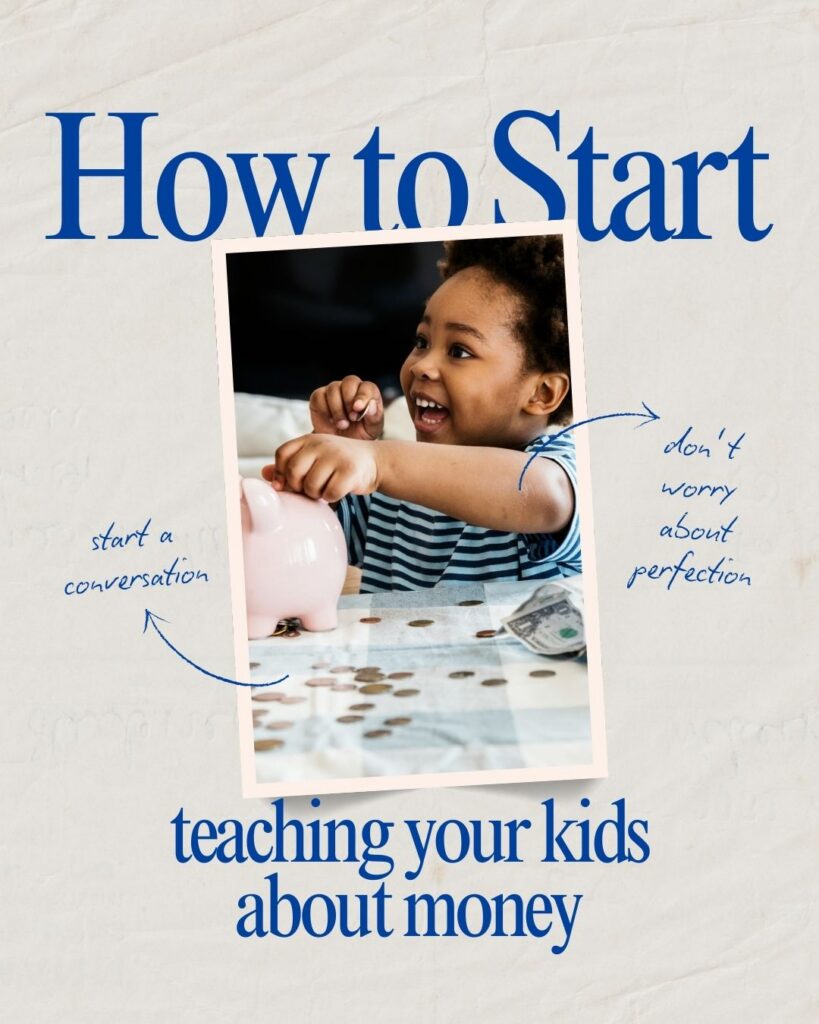
Kids learn money by handling it, making decisions with it, and seeing what happens when those decisions play out. Reading about saving is useful. Actually saving toward a specific goal — watching the jar fill, feeling the weight of the coins, buying the thing at the end — is how the concept becomes real, and why financial literacy activities for kids are so important.
This is a collection of hands-on activities organized by age group. They range from five-minute exercises to hour-long family projects, and most require nothing more than what’s already in your home. Activities marked ⏱ under 15 minutes are flagged for busy parents who want to squeeze something in on a weeknight. Activities marked ❤ Family Bonding are especially suited to doing together.
Before you start: You don’t need to do all of these. Pick one or two per age group that match your child’s current level and your family’s rhythm. Repetition over time matters more than any single activity.
Ages 4-6: Making Money Concrete
At this age, money is a physical object — coins that clink, bills that fold. The activities that work best are tactile, immediate, and tied to real choices your child can make right now. Abstract concepts like saving “for later” work best when later is as close as next week.
| The Three-Jar System ⏱ Ongoing (5 min setup) Teaches: Save, Spend, Share ❤ Family Bonding Label three clear jars: Save, Spend, and Share. Whenever your child gets money — allowance, birthday cash, coins from the couch — they divide it between the jars. The split doesn’t have to be even; the point is making a deliberate allocation decision before spending anything. Over time, kids see each jar grow at different rates and start to feel the difference between money they have access to now (Spend) and money building toward something (Save). This is the single most-repeated activity in financial literacy education because it works. |
| The Pretend Store ⏱ 20–30 min Teaches: Counting money, pricing & transactions ❤ Family Bonding Set up a store using household objects with price tags made from sticky notes. Give your child a small amount of play money (or real coins) and let them “shop.” Then switch — let them run the store while you’re the customer. This activity builds coin recognition, basic addition, and the concept of exchange all at once. For an added layer, let them price the items themselves and see how choices affect whether things sell. |
| Coin Sorting Race ⏱ Under 15 min Teaches: Coin identification & value Dump a pile of mixed coins and time how quickly your child can sort them into pennies, nickels, dimes, and quarters. Once sorted, count the total together. This builds coin recognition faster than any worksheet, and kids genuinely enjoy the speed element. You can extend it by asking “which pile is worth the most?” — which requires them to think beyond quantity to value. |
| Goal Jar with a Picture ⏱ Under 15 min setup Teaches: Saving toward a goal ❤ Family Bonding Help your child choose something specific they want — a toy, a book, a trip to the ice cream shop. Look up the price together and tape a picture of it to a jar. Every time they add money, they color in part of a simple progress bar drawn on a piece of paper taped to the jar. The visual progress is motivating in a way that an invisible bank account isn’t. For children under 6, keep the goal small enough to reach in 2–4 weeks — long enough to practice patience, short enough to feel the payoff. |
| Grocery Store Price Explorer ⏱ Under 15 min Teaches: Comparing prices & value ❤ Family Bonding At the grocery store, hand your child one item and ask them to find the same item in a different size or brand. Which one costs more? Which one do we usually buy? Why? This introduces comparison shopping in a low-stakes environment. For older children in this range, let them hold the budget for one item category — say, $3 to pick whatever snack they want — and see how they decide. |
Ages 7-10: Understanding Earning and Spending
By second or third grade, children can handle more complexity: multi-week savings goals, simple budgets, and the connection between work and money. These activities introduce earning, comparison, and basic planning.
| Chore Commission Board ⏱ Ongoing (20 min setup) Teaches: Earning, effort & money as compensation for work Set up a board listing optional chores with payout rates. Unlike an allowance that comes automatically, commission only pays when work is completed — a direct link between effort and income. Keep the rates realistic (not $5 for emptying a dishwasher) and consistent. Let kids choose which chores to take on each week, and pay promptly. Over a few weeks, patterns emerge: some kids do just enough for what they need, others hustle. Neither is wrong — but both generate useful conversations. |
| Lemonade Stand (or Mini Sale) ⏱ 1–2 hours Teaches: Pricing, profit, customer service & entrepreneurship ❤ Family Bonding The classic for a reason. Help your child calculate their costs (supplies), set a price, make change, and track profit at the end. The most valuable part isn’t the money earned — it’s the moment they discover that selling price minus costs isn’t all profit, and that not every cup sells. A baked goods sale or used toy table works equally well if lemonade isn’t practical. Pair it with a discussion about what they’d do differently next time. |
| The Weekly Budget Challenge ⏱ Under 15 min per week Teaches: Budgeting & trade-offs Give your child a set dollar amount — their allowance or a designated spending budget — and let them make all their own spending decisions for a week. No bail-outs if they spend it all on day one. At the end of the week, review together: what do they wish they’d done differently? This is more effective than any lecture about spending, because the consequence (running out) is real and immediate. |
| Needs vs. Wants Sort ⏱ Under 15 min Teaches: Needs vs. wants distinction ❤ Family Bonding Write or print a list of 15–20 items (food, phone, video game, coat, movie ticket, electricity, etc.) and ask your child to sort them into “need” and “want” piles. Then compare and discuss the gray areas. Electricity: need. A specific brand of sneakers: need or want? The conversation the gray areas generate is more valuable than sorting the obvious ones. This is a foundational exercise that connects to every spending decision for the rest of their life. |
| Impulse Buy Waiting Game ⏱ Under 15 min Teaches: Delayed gratification When your child wants something in the moment — at the store, at the checkout, online — introduce the waiting rule: they have to wait 48 hours before buying it. After 48 hours, ask if they still want it. More often than they expect, the answer is no. Keep a tally of money saved through the waiting rule. Over time, kids internalize the habit of the pause without needing to be reminded. |
Ages 11–13: Thinking About Money Systematically
Tweens can handle longer time horizons, more complex concepts, and real-world scenarios. These activities introduce budgets, comparison research, and the basics of investing — framed around choices they’ll actually face.
| Monthly Spending Tracker ⏱ Under 15 min per week Teaches: Tracking, categorizing & reflecting on spending Give your child a simple spending log — a notebook, a notes app, or a printable template — and ask them to record every dollar they spend for a month. At the end of the month, total by category: food, entertainment, clothing, transportation, etc. The act of recording spending makes it visible in a way that changes behavior. Most kids are surprised by what they spent the most on. |
| The Big Purchase Research Project ⏱ 30–45 min Teaches: Comparison shopping & value assessment Next time your child wants something over $30 — a game, clothing item, sports equipment — assign them a research project before you’ll consider buying it. They need to find three options at different price points, compare features, and present a recommendation with reasoning. This builds the habit of deliberate evaluation before purchase and is transferable to every significant buying decision for life. |
| The Compound Interest Demonstration ⏱ Under 15 min Teaches: Compound interest & long-term saving ❤ Family Bonding Use a simple compound interest calculator (free online) to show what happens if your child invests $100 now versus $100 at age 25 versus $100 at age 35 — assuming a 7% annual return. The visual difference is striking: $100 invested at age 13 becomes ~$1,750 by age 65, versus ~$430 if invested at age 35. This isn’t about pressure — it’s about making time visible as a financial resource. Most kids find the math genuinely surprising. |
| Family Budget Walk-Through ⏱ 20–30 min Teaches: Real-world budgeting & financial transparency ❤ Family Bonding Share a simplified version of your family’s monthly budget — income, major expense categories, savings, and what’s left. Let your child ask questions. You don’t need to share exact numbers if that feels uncomfortable; you can use percentages or relative amounts (“we spend about three times more on housing than on food”). The goal is demystifying adult financial life. Kids who understand what things actually cost make better spending requests and better decisions with their own money. |
| Stock Market Research Project ⏱ 30–45 min Teaches: Investing basics & company research Ask your child to pick one company they know — any brand they interact with — and research it like an investor. What does the company make? How does it earn money? Is it profitable? What are its competitors? Use free tools like Yahoo Finance to look up the stock price history. They don’t need to understand every metric — the goal is building the habit of asking “how does this company make money?” which is the first question a good investor asks. |
Ages 14+: Real Money, Real Decisions
Teenagers are ready to engage with real financial tools: bank accounts, earned income, credit, and long-term planning. These activities use their actual money and real-world systems to build habits that will carry into adulthood.
| Open and Manage a Checking Account ⏱ Ongoing (1 hour setup) Teaches: Banking, debit, budgeting & tracking ❤ Family Bonding If they don’t have one already, help your teen open a checking account (many banks offer free student accounts; some require a joint holder under 18). The account itself isn’t the lesson — it’s what happens next. Have them set up automatic transfers to savings, track their balance weekly, and manage their own deposits and payments. The first time they overdraft or run a balance lower than expected is a more effective teacher than any conversation. See also When Kids Should Get Their First Bank Account for choosing the right account type. |
| First Paycheck Allocation Plan ⏱ Under 15 min Teaches: Income allocation & savings rate ❤ Family Bonding Before your teen earns their first paycheck, help them decide — in advance — what percentage goes where: a fixed percentage to savings, a fixed percentage for spending, and (if they choose) a percentage to donate. The key is making this decision before the money arrives, not after. Habits set on the first paycheck are the ones most likely to stick through every raise and income increase that follows. Don’t skip this one. |
| Compare the True Cost of Two Career Paths ⏱ 45–60 min Teaches: Income, education costs & lifetime earnings Look up the median salaries for two careers your teen is curious about — one that requires a four-year college degree and one that doesn’t. Then calculate the cost difference in education (including debt) and the earnings difference over the first ten working years. This isn’t an argument for or against college — it’s a real numbers exercise that brings the abstract concept of career ROI into focus. Most teenagers have never actually done this math. |
| Credit Score 101 Role-Play ⏱ Under 15 min Teaches: Credit, debt & responsible borrowing ❤ Family Bonding Walk through what a credit score is, what affects it, and what it determines (interest rates, loan approval, sometimes job applications). Then run a simple scenario: if your teen were to open a credit card at 18 and carry a $500 balance at 20% APR, what would it cost if they only paid the minimum? Use an online minimum payment calculator to show the full cost. The goal isn’t to frighten them about credit — it’s to make the mechanics visible before they encounter them. See Teaching Kids About Credit Cards for more. |
| The 30-Day Spending Challenge ⏱ 30 days (Under 15 min per day) Teaches: Tracking, habit awareness & intentional spending For 30 days, your teen tracks every dollar they spend — every coffee, every app purchase, every split on a group dinner. No judgment, no required changes during the 30 days. At the end, review together: what do the categories look like? What’s the monthly total? Are there any expenses they’d cut if they thought about it? The awareness created by 30 days of tracking tends to change behavior without requiring any rules about what to cut. It’s the financial version of a food diary — the act of recording is most of the intervention. |
The Bigger Picture on Financial Literacy Activities for Kids
No single activity teaches financial literacy. What builds it is repetition — returning to the same concepts through different formats, at different ages, as the stakes get gradually higher.
The families who raise financially confident kids aren’t necessarily the ones who have the most elaborate curriculum. They’re the ones who find small ways to include money in the normal flow of life: letting kids handle transactions, talking through spending decisions out loud, giving kids real control over real money with real consequences.
For game-based approaches to the same concepts, see Games That Teach Kids About Money. For a curated book list organized by age, see Books That Teach Kids Financial Literacy. And for the full framework on what to teach at each age and why, How to Teach Kids About Money is the starting point.