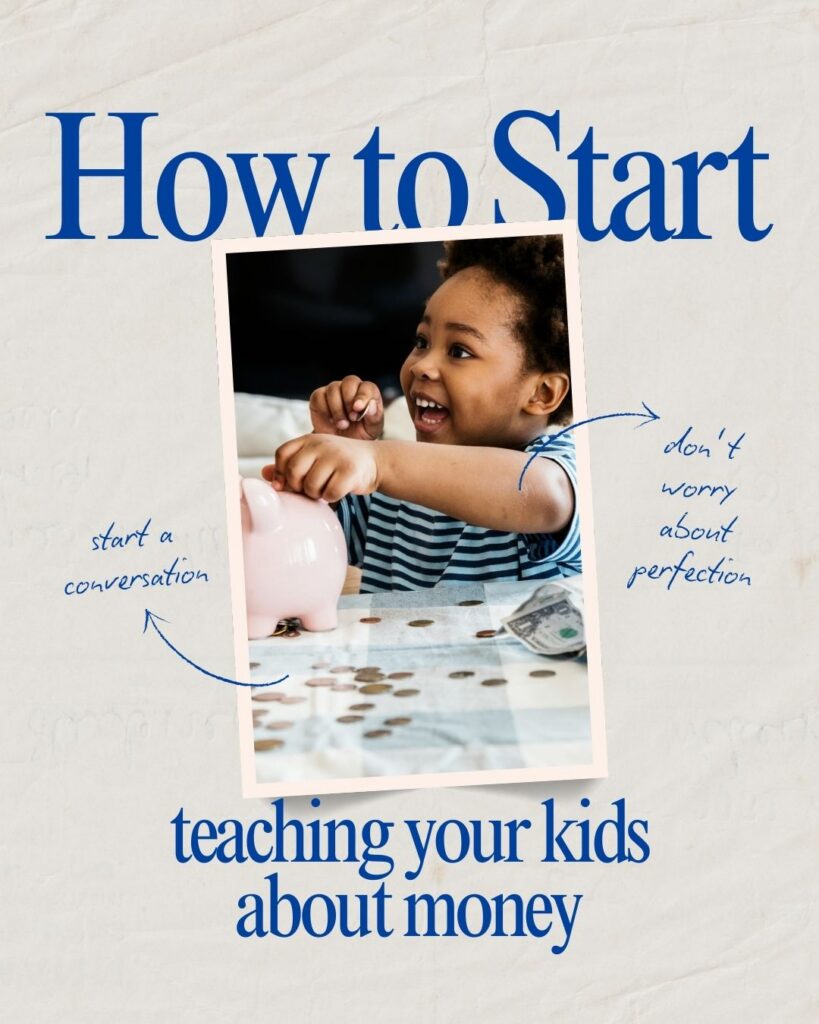
Most parents assume there’s a natural age when money talk begins — somewhere around the time kids get their first allowance, maybe 6 or 7, maybe when they start asking for things at the store. Wait until they can understand it, the thinking goes. Wait until it’s relevant.
Research suggests this instinct is off by several years. So when should kids start learning about money?
A study from the University of Cambridge found that money habits in children are largely formed by age 7. Not understood by age 7. Not introduced by age 7. Formed. The patterns of thinking about spending, saving, and value that kids carry into adulthood are already taking shape in the preschool years — whether parents are intentional about it or not.
That’s not a reason to panic. It’s a reason to start — or to feel good about the fact that you already have. The conversations you have with a 4-year-old about money aren’t wasted on them. They’re landing in fertile ground.
The Surprising Age When Financial Habits Are Already Forming
The Cambridge study tracked children’s developing financial behaviors and found that the cognitive foundations for money decisions — understanding value, waiting vs. spending, fairness, and cause-and-effect — form remarkably early. By the time a child enters second grade, many of their intuitions about money are already in place.
This doesn’t mean a 5-year-old can grasp compound interest or credit scores. It means they’re already building mental models about how money works, what it means to have it, and what it means to want something they can’t have yet. Those models come from somewhere — from watching parents, from everyday experiences, from offhand comments they’ve heard.
The question isn’t whether your child is learning about money. They already are. The question is whether what they’re learning is intentional.
The key insight: You’re not choosing between teaching and not teaching. You’re choosing between intentional teaching and accidental teaching.
What “Learning About Money” Actually Means for a 3-Year-Old
Here’s where most parents get stuck: they picture “financial education” as explaining budgets and savings accounts, and conclude that a toddler isn’t ready for any of it. They’re right about the budgets. They’re wrong about the conclusion.
Money education for a 3-year-old isn’t about finance. It’s about three simpler ideas that form the foundation everything else builds on:
Things cost money. When you pick something up at the store, you trade money for it. The money leaves; the thing comes home. That exchange is real and worth naming out loud.
Money comes from work. It doesn’t appear from cards and screens and ATMs. Grown-ups go to work and get paid. Kids don’t need a detailed explanation of employment — they need to see the basic connection.
You can’t always have everything you want right now. This is the foundational concept that sits underneath saving, budgeting, and every financial decision they’ll make for the rest of their lives. The earlier it’s practiced (gently, age-appropriately), the more natural it feels.
None of these require a formal lesson. They happen through narrating everyday life: “I’m paying for our groceries with my card — that money comes from my job.” “I want that too, but it’s not in our plan for today.” These moments, repeated over time, are the curriculum.
Ages 3–4: The Right First Lessons (Hint: It’s Not Math)
Ages 3–4
At this age, abstract concepts don’t stick — physical experiences do. The goal is exposure and familiarity, not comprehension.
Let them handle money. Give them coins to look at, count, and carry. Let them hand over cash at the register. The physicality of money — the weight, the exchange, the transaction — builds intuition that card swipes don’t.
Name the exchange. Every time you buy something, you can say: “I’m trading money for this.” Simple, brief, repeated. Over months and years, this narration builds an accurate mental model.
Introduce “not today.” When a child asks for something in a store, “not today” — said calmly and without drama — is the earliest form of delayed gratification practice. It teaches that wanting something and getting it aren’t the same event.
Takeaway: The goal at this age isn’t understanding. It’s familiarity. Money is a normal part of life, not a mysterious adult thing.
Ages 5–7: When Real Money Concepts Click
Ages 5–7
Around age 5, something shifts. Kids become capable of holding a simple cause-and-effect sequence in mind: if I save this, I can get that later. This is the window when the first real money concepts can take hold.
Give them their own money. A small regular allowance — even $1 or $2 per week — gives them something to practice with. Decisions about real money are worth more than any hypothetical exercise.
Introduce the save/spend split. Two jars, labeled Spend and Save. Not a complicated system — just the basic idea that money can have different purposes. For more on how this develops, see Best Money Lessons for Kids Under 10.
Set a first savings goal. Let them pick something they want that costs more than they currently have. Show them how many weeks of saving it will take. Tape a picture to the jar. The experience of waiting and then getting something they saved for is formative in a way that’s hard to replicate.
Shop with them, not around them. Let them see you compare prices. Let them help choose between two options. Ask: “This one is $3 and this one is $5 — what’s the difference? Is it worth it?” You’re building a decision-making reflex, not teaching math.
Takeaway: This is the prime window. The habits and mental models formed at 5–7 are the ones that tend to stick.
Why Waiting Until Middle School Is Too Late
By the time kids hit 11 or 12, the foundational beliefs about money are already there. Not necessarily correct beliefs — but established ones. A child who has spent six years watching money appear magically from a card and flow freely toward whatever they want has internalized a set of assumptions that will take real effort to rewire.
Middle school financial education — budgeting worksheets, lectures about credit — sits on top of whatever foundation was built in the early years. If that foundation is solid, the lessons accelerate development. If it isn’t, the lessons bounce off.
This is worth saying clearly: waiting until kids “can handle it” often means waiting until the window for foundational habit formation has closed. The middle school curriculum assumes a foundation. You build the foundation in the early years.
The full breakdown of what to teach at every stage is in Financial Literacy for Kids by Age, which covers everything from toddlers through teenagers.
The Simplest Way to Start Today, No Matter Your Kid’s Age
If you’re reading this and feeling behind — you’re not. The research on early habit formation isn’t meant to create guilt; it’s meant to create urgency. And urgency is useful, because the second-best time to start is right now.
Here’s the simplest starting point by age:
Ages 3–5: Narrate one money exchange out loud today. “I’m paying for this with my card — this money came from my job.”
Ages 5–7: Set up two jars labeled Spend and Save. Give them a small amount of money and let them split it.
Ages 8–12: Help them pick one savings goal they actually want. Write it down, set a timeline, and put a picture on the jar.
Ages 13+: Have one real conversation about your family’s budget — what comes in, what goes out, and how decisions get made.
None of these require a curriculum or a plan. They require one conversation, or one jar, or one narrated moment at the grocery store. Start there.
The complete foundation for what to build from that starting point is in How to Teach Kids About Money — which covers the full arc from early concepts through financial independence habits.
FAQ: Common Parent Questions About Starting Early
| Won’t talking about money make kids anxious? | Only if the tone is anxious. Kids pick up on emotion more than content. Matter-of-fact conversations about money — “we’re choosing the store brand because it’s a better deal” — normalize it without creating worry. |
| My kid is already 10. Is it too late? | No. The habits formed early are harder to change, but they’re not fixed. Age 10 is still well within the window for building solid money foundations — especially if you give them real money to practice with. |
| Should I tell my kids how much we earn? | Not necessarily, but more transparency than most parents default to is usually fine. You don’t need a number — “we have enough for what we need, and we make choices carefully” is honest and calm. Older kids can handle more specifics. |
| What if I didn’t grow up learning about money? | You’re not passing on a perfect financial education — you’re building one alongside your kids. Being honest about learning together is itself a good money lesson. See Teaching Kids Needs vs Wants for where to start. |
| How do I talk about money without making it seem like we’re struggling? | Frame conversations around choices, not scarcity. “We’re choosing to spend our money on X, so we’re not spending it on Y” teaches prioritization without creating financial anxiety. |
The Bottom Line
The best age to start teaching kids about money was three years ago. The second-best age is today.
Financial habits form earlier than most parents expect — and the early years, when money is still a concrete, physical, experiential thing, are actually easier to work with than the abstract financial concepts that come later. A jar on a shelf, a narrated trip to the store, a first savings goal — these aren’t small things. They’re the foundation.
If you’re not sure where to begin, How to Teach Kids About Money is the place to start — a full framework for every age, built around the same idea: earlier is better, intentional beats accidental, and the habits you build now are the ones they’ll carry.