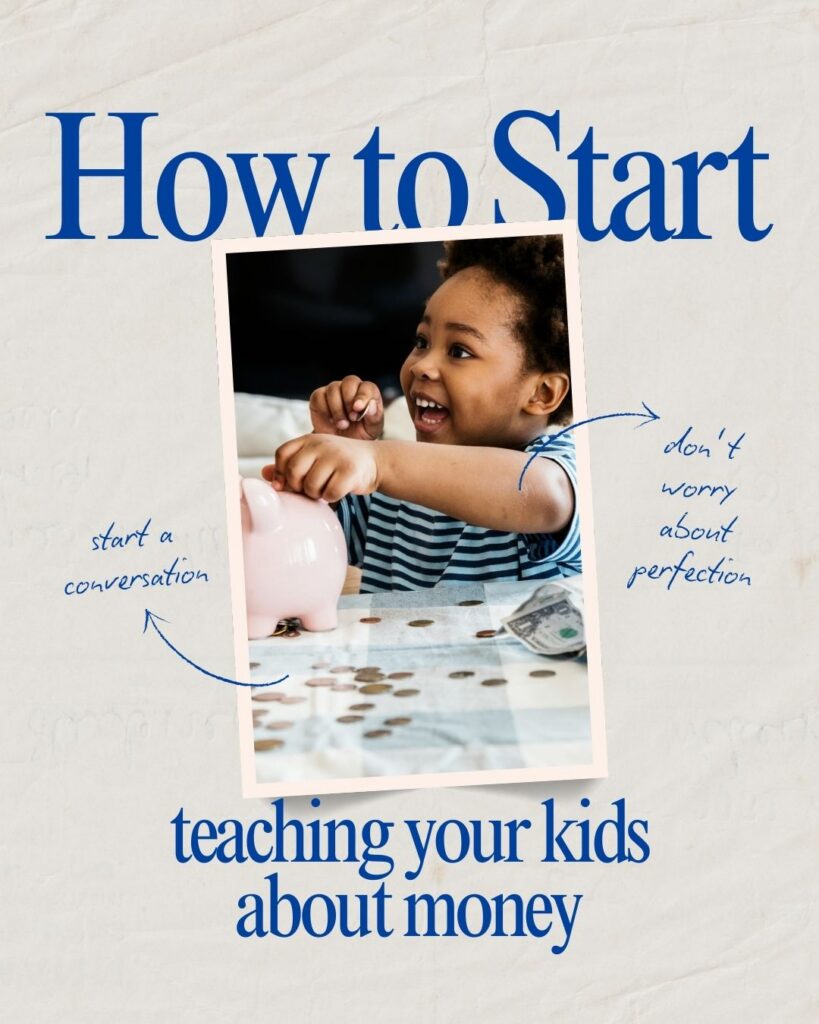
At some point, the jar on the shelf stops being enough. But when should kids get their first bank account?
A child who has been saving in a physical jar has learned something real: that money accumulates, that goals take time, that spending the jar means starting over. But jars have a ceiling. They don’t teach what happens when money lives in a system — how to check a balance, how a deposit works, how interest compounds, or how to make decisions when the money isn’t physically in front of you.
A bank account is that next step. The right one, opened at the right time, with the right amount of involvement from you, becomes one of the most effective financial education tools a kid can have. The wrong one — opened too early, with no guidance, or with features that undermine the lesson — is just a place where money disappears and nobody learns anything.
Here’s how to make the right call.
The Right Age: What the Experts and the Evidence Say
Most child financial development experts put the sweet spot for a first savings account at around ages 6–8. That’s not a hard rule — it’s a window. What matters more than the number on a birthday cake is whether the child has the foundational concepts in place. Understanding those concepts truly determines when should kids get their first bank account.
Before opening an account, a child ideally understands:
That money is finite. You spend it, it’s gone. There isn’t always more.
That saving means waiting. Money in the jar (or account) is money being held for something — not money being forgotten.
That they have a savings goal. An account with no purpose is just a container. A child with a goal — even a small one — has a reason to interact with the account and watch it grow.
If those pieces are in place, opening an account tends to accelerate learning rather than confuse it. If they’re not, the account often becomes background noise — opened with good intentions, never really used as a teaching tool.
For building those foundations first, see Teaching Kids the Value of Saving and Financial Literacy for Kids by Age.
Signs Your Kid Is Ready
Use this checklist as a readiness gauge — not a pass/fail test. Three or four checks is plenty to move forward and help you answer when should kids get their first bank account.
Signs your child is ready for a first bank account: ✓ They understand that money in a jar (or account) doesn’t disappear — it stays there until spent ✓ They have at least one savings goal they’ve set themselves ✓ They can count money and understand basic addition ✓ They’ve asked questions about where your money “lives” or how a bank works ✓ They’ve successfully saved toward a small goal and experienced the payoff ✓ They understand that spending the savings means the goal gets pushed back ✓ They can handle mild disappointment when they can’t buy something immediately
Notably absent from this list: a minimum amount of money. A child opening an account with $8 in savings and a $22 goal is having a far richer learning experience than a child with $200 in an account they never look at.
Types of Accounts: What’s Actually Available
Not all kids’ accounts are the same, and the differences matter. Here’s a straightforward breakdown:
| Account Type | Best Age | How it Works | Best For |
| Custodial savings account | 6-12 | Parent owns, child is beneficiary. Converts to child’s account at 18. | Best first account — low or no fees, parent oversight, savings focus. |
| Joint savings account | 6-14 | Parent and child are co-owners. Either can access funds. | Good for active teaching; parent has full visibility and control. |
| Kids’ debit / prepaid card | 6-12 | Preloaded card with parental controls. Not a true bank account. | Ideal for teaching spending habits before a real account. (e.g. Greenlight, GoHenry) |
| Teen checking account | 13-17 | Designed for teens; usually requires a parent co-signer. | Best at 13+ when teen is managing more independence. (e.g. Chase First Banking, Capital One MONEY) |
Custodial Savings Accounts
A custodial account is legally owned by the parent (or guardian) until the child reaches adulthood — typically 18 — at which point it transfers automatically to the child. The child is the beneficiary. This structure gives parents full oversight while the child learns.
Most traditional banks and credit unions offer custodial savings accounts with no monthly fees and no minimum balance requirements for minors. These are the simplest starting point for younger kids (ages 6–10) who are learning what an account is and how it works.
Joint Accounts
A joint account makes both parent and child co-owners. Either party can deposit, withdraw, and view the balance. This works well for slightly older kids (8–14) where the learning objective includes the child having real agency — making deposits themselves, checking their own balance, participating in decisions about the account.
Kids’ Debit and Prepaid Cards
Apps like Greenlight, GoHenry, and similar products are technically prepaid debit cards rather than bank accounts — but for teaching purposes, they often function better. They offer visual savings goals, spending controls by category, instant notifications, and parent dashboards.
The trade-off: they typically charge a monthly fee ($5–$10). For families who will actively use the features, the educational value often justifies the cost. For families who will treat it like a standard account, a free custodial account serves just as well.
Teen Checking Accounts
Products like Chase First Banking and Capital One MONEY are designed specifically for teenagers. They come with a debit card, parental controls, and spending visibility — and they teach the mechanics of a real checking account before the teen has one independently.
These make the most sense at 13 or older, when the teen is starting to manage more of their own day-to-day spending and needs a tool that matches that level of independence.
What to Look For in Any Kids’ Account
Before opening anything, run the account through this feature checklist:
| Feature to Look For | Why It Matters |
| No monthly fees | Kids’ accounts should be free — or fees should be easily waivable. Don’t accept fees on a children’s account. |
| No minimum balance requirement | A child saving $5 at a time shouldn’t get penalized for a low balance. |
| Parental visibility and controls | You should be able to see the balance and transactions. Younger kids especially need this. |
| Visual savings tools | Goal trackers, progress bars, or savings “jars” make the account a teaching tool rather than just a storage account. |
| FDIC insured | Ensure deposits are protected. Most bank accounts are; verify before opening. |
| Easy transfers from parent account | You’ll want to move allowance money easily. Friction here becomes an excuse not to use the account. |
One feature worth emphasizing: visual savings tools. An account that shows a progress bar toward a named goal — “Sofia’s Bike Fund: $34 of $60” — does something a plain balance number doesn’t. It makes the goal visible every time the child logs in, which maintains motivation in a way that abstract numbers don’t.
How to Open the Account as a Teaching Moment
The account opening itself is an opportunity, not just an errand. A few things that make it meaningful:
Bring the child. If you’re going to a bank branch, bring them. Let them hand over the initial deposit. Let them sign their name (or watch you sign). The physical experience of “opening” something makes it real in a way that a parent-completed online form doesn’t.
Name the first goal together. Before closing the browser or leaving the branch, set the first savings goal together. What are they saving toward? How much does it cost? How long will it take at their current saving rate? Write it down or take a screenshot.
Show them the balance. Demonstrate how to check the balance — online, via app, or at an ATM. The first time a child sees their own account balance on a screen, something clicks. Money in a jar is theirs. Money in a system is also theirs — and that’s a bigger concept than it sounds.
Try saying: “This is your account. That number is how much money you have saved. Every time you add money, that number goes up. We’re going to check it together every week until you reach your goal.”
How to Use the Account as an Ongoing Teaching Tool
Opening the account is the easy part. Using it well over time is where the real education happens.
Make Regular Deposits a Ritual
Whether it’s weekly allowance, birthday money, or earnings from extra chores, deposit money regularly — and do it with the child, not for them. Let them make the transfer or hand over the cash to be deposited. The act of adding to the account is the habit you’re building.
For how to structure allowance so there’s always something to deposit, see How Much Allowance Should Kids Get by Age.
Review the Balance Together
Once a month — even just for a few minutes — look at the account together. How much is in there? How close is the goal? Has the interest added anything? This keeps the account alive as a learning tool rather than letting it go dormant.
Younger kids respond well to seeing the number go up. Older kids can start tracking their own progress and calculating how long until they reach their goal. Both are valuable.
Let Them Make Real Decisions
When the savings goal is reached, let them make the withdrawal and the purchase themselves — or at least be present for it. The transaction that closes the loop (saving → goal reached → purchase) is the most important moment in the whole cycle. Don’t let it happen passively.
After the purchase, set a new goal immediately. An account without a purpose loses its teaching function quickly.
Introduce Interest
Even a small savings account earning 0.01% interest earns something. That something — however tiny — is a chance to explain that money can earn money. “You didn’t do anything, and the bank paid you 3 cents this month. That’s because they’re using your money while it’s in there, and they pay you for the privilege.” That’s a concept worth planting early.
The bigger picture: A bank account is not just a container. Used well, it’s a monthly financial education session built into ordinary life. Every deposit, every balance check, every goal reached teaches something about how money actually works.
What to Avoid
Accounts with fees. There’s no reason to pay monthly fees on a child’s first savings account. Free options exist at virtually every bank and credit union.
Accounts you never look at together. An account that gets opened and forgotten isn’t teaching anyone anything. Schedule the monthly check-in.
Taking over the goal-setting. A goal the parent chooses (“save for college”) won’t motivate a 7-year-old. A goal the child chooses (“save for the Pokémon box set”) will. Trust the process — the habit of saving transfers to bigger goals over time.
Bailouts. If a child impulsively spends their savings and loses progress toward their goal, resist the urge to replenish it. The experience of starting over — and the slight sting of that — is exactly what makes the lesson stick.
The Bottom Line
Most kids are ready for a first savings account somewhere between ages 6 and 8 — when they understand that money is saved, not just held, and when they have something real to save toward.
The account type matters less than how you use it. A free custodial savings account at a local credit union, used intentionally — with regular deposits, monthly check-ins, and child-chosen goals — will teach more than any premium fintech app left to run on autopilot.
Open it together. Give it a purpose. Check it regularly. Let them make the decisions. That’s the whole system.
For the complete roadmap of what financial skills to build at every age, see Financial Literacy for Kids by Age.