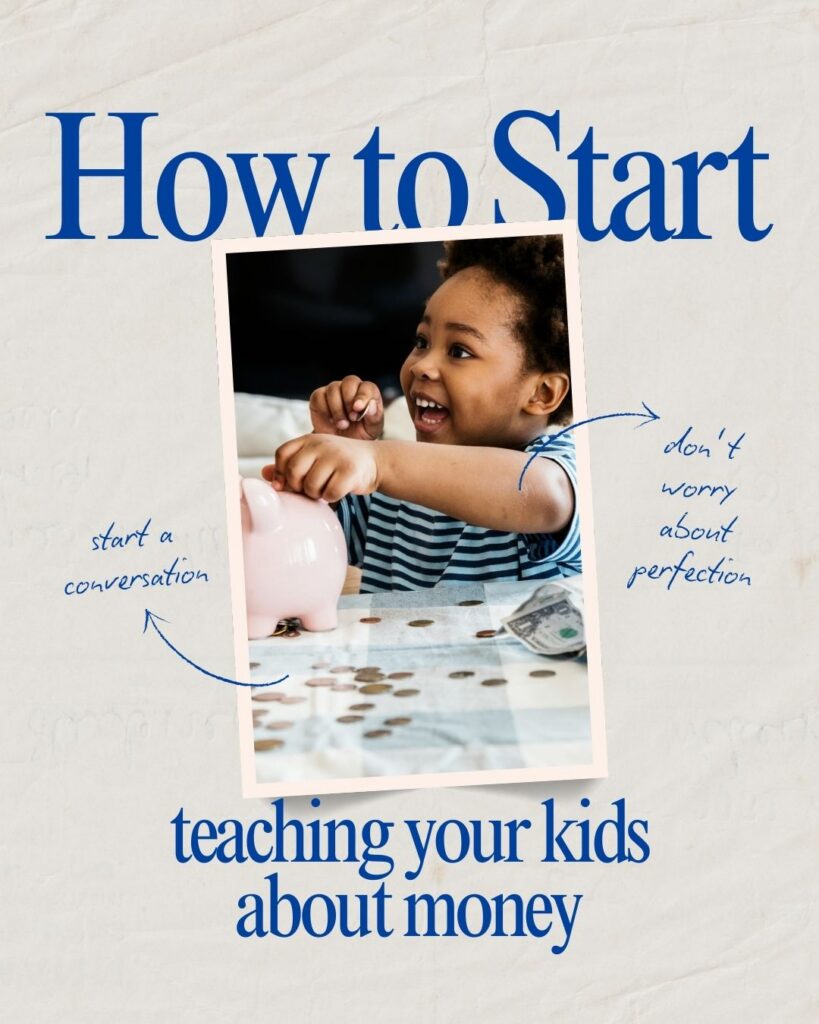
Here’s something most parents don’t realize until it’s almost too late: by the time your child leaves your house, they’ll have made thousands of small financial decisions — what to spend, what to save, whether something is worth it, how to handle having more or less than they expected. Those decisions are built on a foundation laid in your home, mostly before they turned twelve. This is why it’s so important to learn how to teach kids about money.
Schools cover almost none of this. A 2022 survey found that only 25 states require any personal finance coursework for high school graduation — and most of those courses are a single semester, covering the basics of checking accounts and nothing deeper. That leaves the rest of the education — the identity, the habits, the values — to parents.
This guide is the complete framework for that education. Not a collection of tips, but a coherent approach: what to teach, when to teach it, how to make it stick, and — most importantly — how to make sure the underlying mindset is one that actually serves them.
Everything here is written for parents who weren’t handed a financial education themselves, and who want to break that pattern with their own kids.
Why Most Kids Grow Up Financially Clueless (And Why It’s Not Their Fault)
Ask most adults where they learned about money. The most common answer is some version of: “I figured it out on my own. Usually the hard way.”
That’s not an accident. Money is one of the few genuinely important life skills that has been systematically excluded from formal education and treated as a private family matter too awkward to discuss openly. The result is that most children absorb their financial beliefs not from intentional teaching, but from a combination of overheard adult stress, occasional lectures about not wasting things, and whatever they pick up watching how the adults around them handle — or avoid — money.
That’s a thin and often distorted financial education. Kids who grow up in households where money was tight may internalize that money is always scarce and stressful. Kids who grow up in households where money was plentiful may never learn that it has limits. Neither set of kids gets a working framework for making financial decisions as adults.
The good news is that intentional financial education doesn’t require expertise. It requires consistency, honesty, and the willingness to make money a normal topic in your home — not a source of secrecy or shame.
The #1 Mistake Parents Make When Teaching Kids About Money
The most common mistake isn’t failing to give an allowance, or not opening a savings account, or skipping the budgeting lessons. Those are tactics, and tactics are the last thing to worry about.
The most common mistake in how to teach kids about money is teaching the tactics before the mindset.
A child who has a three-jar allowance system but believes money is something you hold onto out of fear will become an adult who hoards money anxiously. A child who earns money doing chores but has never been taught that money is a tool for building the life you want will grow into an adult who earns and spends without direction.
The jar is a prop. The allowance is a prop. The savings account is a prop. What gives these things meaning is the belief system underneath them — the relationship with money that a child builds through years of small, repeated interactions.
Teach the mindset first. The tactics are just delivery mechanisms for the beliefs you’re trying to build.
This is the core principle behind everything in this guide: before you worry about which app to use or how much allowance to give, make sure you’re building the right foundation underneath those decisions.
The Wealthy Mindset vs. the Scarcity Mindset: What to Teach First
There are two fundamentally different ways of relating to money. They’re not really about how much you have — they’re about what you believe money is, what it’s for, and what’s possible with it.
The table below shows how these two mindsets sound in practice. Read through it and notice which column sounds more familiar from your own upbringing:
| Scarcity Mindset | Wealthy Mindset |
| “We can’t afford that.” | “That’s not how we’re choosing to spend right now.” |
| Money causes stress; better not to talk about it. | Money is a neutral tool — understanding it reduces stress. |
| Saving means going without something. | Saving means future options and more freedom. |
| Investing is for wealthy people, not us. | Investing is how ordinary people stop trading all their time for money. |
| Mistakes with money are shameful. | Mistakes with money are how you learn to handle it better. |
None of this is about pretending money isn’t sometimes tight, or that financial stress doesn’t exist. It’s about the frame you put around that reality. “We can’t afford that” closes the conversation and communicates helplessness. “That’s not how we’re choosing to spend right now” acknowledges limits while maintaining agency.
That distinction — between a fixed limit and a made choice — is the seed of every good financial decision your child will ever make.
The wealthy mindset doesn’t come from having money. It comes from parents who talked about money as something manageable, learnable, and purposeful. You can give your kids that frame regardless of your own financial situation.
Age-by-Age Breakdown: What to Teach and When
Here’s how the core concepts layer on top of each other across childhood. Each stage builds on the one before it and shows a natural way of how to teach kids about money. If you’re starting late with an older child, compress the earlier stages rather than skipping them — the foundation matters.
Ages 3–5 — Money is real, and it has rules
At this age, the goal is simple: make money tangible and connect it to cause and effect. Preschoolers think in concrete, physical terms — abstract ideas don’t land until they’re attached to something they can hold, see, and touch.
Let them handle coins and small bills. Identify them together: “This is a quarter. It’s worth 25 cents — that’s the same as five nickels.” Take them to a store and let them hand over money and receive change. Name the transaction out loud: “You gave the lady $1 and got something worth 75 cents, so you got 25 cents back.”
The one concept to plant at this stage: choosing one thing means not having another. At a dollar store with $2, they can pick two things or one bigger thing. Either way, when the money is gone, it’s gone. Don’t fill the gap.
Ages 6–10 — Earning, saving, spending, and giving
This is the most important developmental window for financial identity. The habits and beliefs formed here — about whether money is earned or given, whether saving is natural or forced, whether spending is something to think about or something automatic — tend to stick. It’s a key phase of life to teach kids about money.
Four things to build into this stage:
Earning. Give kids the experience of earning through effort — not just receiving. A small paid-task list (distinct from non-negotiable family duties) teaches the income-effort connection directly. For the right structure here, see Allowance vs Chores.
Saving before spending. The three-jar split — spend, save, give — builds the habit of allocating money before deciding what to do with it. This mirrors the adult practice of paying yourself first. See Teaching Kids the Value of Saving for how to build the identity alongside the habit.
Spending with awareness. Let them make their own spending decisions — and live with the results. A child who regrets a purchase at age eight learns the lesson cheaply.
Giving intentionally. The give jar teaches that money has a community dimension. Let them choose where it goes — that ownership makes giving something they carry forward rather than something imposed.
For the lesson-by-lesson breakdown of this age range, see Best Money Lessons for Kids Under 10.
Ages 11–13 — Budgets, goals, and delayed gratification
By eleven, kids are ready to manage money across a longer time horizon. Weekly allocation gives way to thinking in months: how long will it take to save for this? If I buy this now, what am I giving up?
Introduce a simple category budget: a fixed amount per month for personal spending across things like entertainment, snacks, and small purchases. Let them decide how to allocate within it. The goal isn’t that they always get it right — it’s that they develop the habit of thinking ahead.
This is also when the concept of delayed gratification starts to carry real weight. An eleven-year-old who saves for three months for something they genuinely want is building a financial muscle that most adults never fully develop. The
Financial Literacy for Kids by Age guide maps out the full progression of concepts for this stage and beyond.
Ages 14–17 — Income, investing, and credit basics
These are the final years before your child makes independent financial decisions — and those decisions are coming fast. First jobs, car insurance, college costs, possibly credit cards. The window for structured teaching is closing.
Three areas to cover before they leave:
Real income. A part-time job or small service business isn’t just about the money — it’s about understanding a pay stub, experiencing the gap between gross and net pay, and feeling the weight of hours-to-dollars math. Walk through their first pay stub with them.
Investing basics. Open a custodial investment account together and put in a small amount — $25 to $50 is enough to make the concept real. Talk about what an index fund is, why it tends to grow over time, and why starting at sixteen is dramatically better than starting at twenty-six. The compound interest math is motivating when they run the numbers themselves.
Credit — how it works and how it can hurt. Most teenagers enter adulthood with no credit history. Consider adding them as an authorized user on a card you already manage well — they get credit history, you maintain control. Pair it with an honest conversation about how credit scores are built (and destroyed).
How to Make Money Conversations Normal in Your Home
The single most effective thing you can do for your child’s financial education costs nothing and takes almost no time: stop treating money as a topic that gets discussed only in emergencies.
Most kids grow up in homes where money is either a source of visible stress or a carefully hidden subject. Both messages are damaging. Stress signals that money is dangerous. Secrecy signals that money is shameful. Neither gives kids the tools they need.
The alternative is to narrate your own financial decisions, briefly and without drama, as part of normal life. Not lectures — observations. A few examples:
“I’m buying the store brand because it’s the same thing for $1.50 less. Over a month that adds up.”
“We could go to that restaurant but I’d rather save the money for our trip. Different families make different choices.”
“That’s a good question — we could afford that, but we’ve decided we’re saving that money for something else instead.”
These aren’t lessons. They’re just transparent thinking out loud. Kids absorb how the adults in their lives reason about money — consciously or not. Make your reasoning visible.
If you didn’t grow up with good financial modeling, that’s okay. The goal isn’t to be perfect; it’s to be open. Saying “I’m still figuring some of this out too, but here’s how I’m thinking about it” is more valuable than any polished explanation.
One practical habit: Once a month, spend five minutes at the dinner table talking about a money decision your family made — what you chose, what you gave up, and why. No agenda, no lesson plan. Just a normal conversation.
The 3 Habits to Build Before Age 10
If you could only focus on three things in the first decade of your child’s financial education, these are them. Everything else is secondary.
1. Split every dollar that comes in.
Before any spending decision gets made, money gets divided. Spend, save, give — whatever the percentages, the split happens first. This builds the foundational habit that shows up later as budgeting, saving before spending, and intentional giving. Physical jars work better than apps for under-ten kids; the act of touching and sorting the money matters.
2. Earn something real.
At some point before ten, every child should have the experience of working for money and receiving it. Not hypothetically — actually. A task they completed, a dollar they earned, a transaction that felt real. The amount doesn’t matter. The connection between effort and income does. It’s the difference between a child who asks for money and a child who thinks about how to earn it.
3. Ask “is this worth it?” before buying.
This one sounds simple but it’s transformative. Train your child — through repetition, not lectures — to pause before any purchase and ask: is this actually worth what I’m giving up for it? Not always, not dramatically, just as a habit. A kid who asks this question a thousand times before adulthood has a built-in decision filter that most adults never develop. See Teaching Kids Needs vs Wants for how to build this into their thinking at each age.
Tools, Accounts, and Resources Worth Using
The best tools are the ones that match where your child is developmentally. Here’s what actually works at each stage:
Ages 3–8: Physical jars or a divided piggy bank. No app can replicate the tactile experience of handling real money and watching a jar fill up. Clear jars with labels (spend / save / give) are the most effective tool at this age. Cheap, simple, works.
Ages 6–12: A basic kids’ savings account. Once a child is consistently earning and saving, a real bank account makes saving feel official. Many credit unions and online banks offer youth savings accounts with no fees and no minimums. The act of depositing money and watching the balance grow is a motivating next step beyond the jar. For timing and what to look for, see When Kids Should Get Their First Bank Account.
Ages 13–17: A checking account with a debit card. This is the real-world practice environment. A debit card attached to a checking account — with a balance they can see — teaches digital money management before the stakes are high. Pair it with a monthly budget they manage themselves.
Ages 14+: Authorized user on a parent’s credit card. For building credit history before adulthood. Use it for one small recurring purchase, pay it off monthly, and use it as a concrete teaching moment about how credit utilization and payment history affect a score.
Ages 13+: Apps like Greenlight or FamZoo. These are genuinely useful for tech-comfortable families who want digital tools that give parents visibility and kids practice with real accounts. Not necessary, but a reasonable option if your teenager is more motivated by their phone than by physical jars.
What if I don’t feel confident about money myself? Can I still teach this?
Yes — and the fact that you’re thinking about it puts you ahead of most parents. You don’t need to be financially sophisticated to model good habits and have honest conversations. “I’m still learning too, and here’s what I’ve figured out” is a more powerful message than a confident lecture from someone who has it all sorted. Your uncertainty, handled openly, teaches kids that financial literacy is a skill you build — not something you either have or don’t.
My kid doesn’t seem interested in money at all. Should I force the issue?
Don’t force sit-down financial lessons. Instead, use real moments when they arise — a purchase, a price comparison, a question about how something works — and keep responses short and conversational. Sustained interest usually develops once kids have some money of their own to manage. The act of handling real money creates the motivation that no lesson plan can manufacture. Start with a small allowance or earning opportunity and let the interest follow.
We don’t have a lot of money. Won’t this just stress my kids out?
Talking about financial limits isn’t the same as transferring financial anxiety. The difference is in the framing. “We’re tight this month so we’re making different choices” is honest and calm. What stresses kids out isn’t knowing there are limits — it’s feeling the unspoken tension of limits that aren’t explained. Honest, matter-of-fact conversations about money — including constrained finances — build resilience, not stress.
How do I handle it when grandparents or other family members just hand kids money without any structure?
You can’t control what relatives give, and trying to police it usually creates more friction than it’s worth. What you can do is create a consistent structure on your end: when money comes in — birthday gift, holiday money, whatever — it still goes through the split. The jar system applies to money from any source. Over time, the habit of splitting becomes automatic enough that outside gifts get absorbed into the framework rather than disrupting it.
When is it too late to start?
It isn’t. The research on early financial habit formation describes averages, not hard cutoffs. A twelve-year-old who starts managing real money today will build those habits faster than you expect. A sixteen-year-old who finally understands how credit works before their first card application is better positioned than most adults were at that age. Start where you are, with what you have. The best time to start was when they were five. The second best time is now.
For the complete age-by-age roadmap and developmental milestones, see Financial Literacy for Kids by Age. For how to structure allowance specifically, see How Much Allowance Should Kids Get by Age. And for the foundational money lessons to prioritize in the early years, Best Money Lessons for Kids Under 10 covers each one in depth.