Ask a typical 11-year-old to do their laundry, and you’ll get an eye roll. Call it a “life skill they’ll need before college,” and you might get slightly less of one.
The shift in framing is not trivial. Tweens aged 11–14 are in a developmental stage that’s all about identity, competence, and autonomy. They’re less motivated by compliance and more motivated by genuine ability. The parents who get the most out of this age group are the ones who tap into that.
This guide covers chores for 11-14 year olds that make sense at this stage, how to assign them without making it a battle every time, and how to use household responsibility as a bridge to the independence your tween is already reaching for.
What’s Developmentally Happening at 11–14
Tweens are navigating a lot simultaneously: puberty, social complexity, school pressure, and a growing sense of self that is in constant tension with the family structure they grew up in.
The implication for chores: demanding compliance through authority alone works less and less well. What works better is genuine responsibility with genuine consequences, framed as growing into adulthood rather than being bossed around.
The good news: tweens are capable of adult-level household tasks. They can cook, clean, and manage their own time. The question is how to channel that capability into consistent contribution.
| The Framing That Works with Tweens Not: “You have to do these chores.”But: “As you get more independence, you take on more responsibility. That’s how it works.”Tie increased chore ownership directly to increased privileges (later bedtime, more screen time, more unsupervised outings). Frame it as readiness, not punishment. |
Core Chores for 11–14 Year Olds
1. Doing Their Own Laundry — Start to Finish
Sort, wash, dry, fold, put away. By 12, this should be fully independent. This is one of the highest-return life skills you can teach — the number of college students who don’t know how to do laundry is genuinely alarming.
Teaching note: Spend one week doing it together. The second week, they lead; you observe. Third week: they own it. Set a weekly laundry day to build the habit.
2. Cooking Simple Meals for the Family
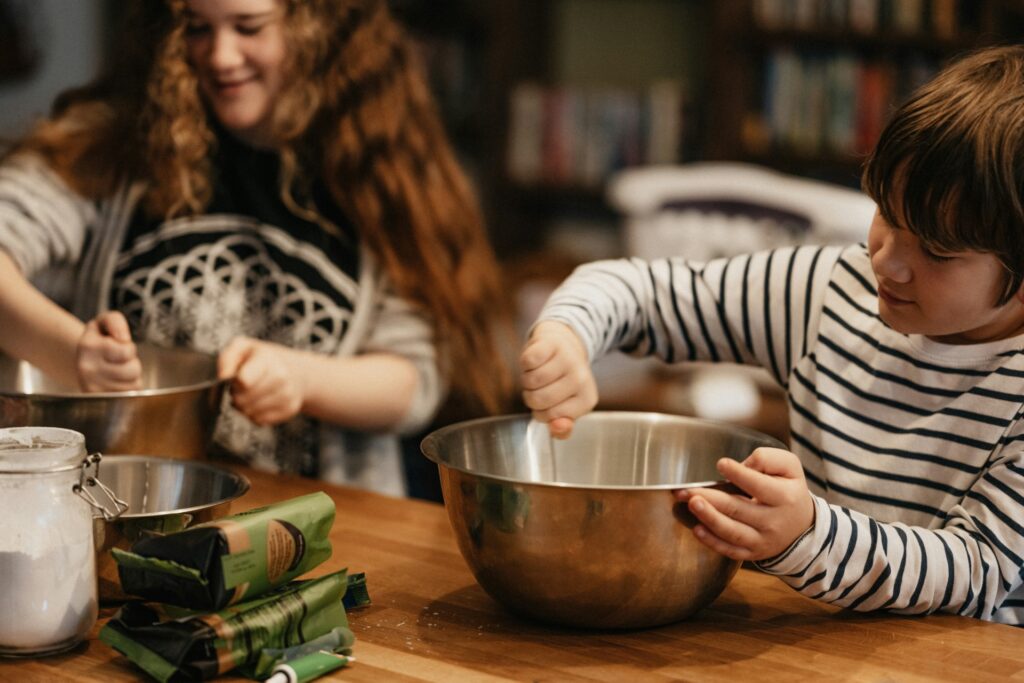
Not just scrambled eggs — a full meal. Pasta dish, stir-fry, tacos, soup. By 13, many tweens can competently prepare a dinner for the whole family with minimal help.
Teaching note: Assign one dinner per week as their responsibility. Start with a recipe they choose. Give them ownership over the planning and shopping list too.
3. Mowing the Lawn
Both gas and electric mowers are appropriate at this age with proper instruction. Teach the safety rules, the correct pattern, and how to handle obstacles. Then step back.
Teaching note: Safety first: shoes, no flip-flops, clear the yard of debris before starting, never mow wet grass. Walk through it once together, then let them take over.
4. Deep Cleaning Shared Spaces
Beyond surface tidying: baseboards, window sills, inside the microwave, behind the toilet, under furniture. These are the “really cleaning” tasks that adults do grudgingly. Tweens can learn them now.
Teaching note: Assign a zone of the house. Monthly deep clean. Give them a checklist so they know the standard.
5. Grocery Shopping
From a list, or eventually from a meal plan they helped create. This teaches them to navigate a store, compare prices, and make real-world purchasing decisions.
Teaching note: Start by sending them to find 3–5 specific items while you’re shopping together. Progress to giving them a list and $40 to complete it independently.
6. Managing Their Own Schedule
Appointments, deadlines, extracurricular schedules. By 13, a tween should be tracking their own calendar rather than relying on a parent to manage every detail.
Teaching note: Get them a planner or help them set up a calendar app. Have them tell you what’s happening that week, not the other way around.
7. Car Washing
Interior and exterior. This is a good weekend task that’s physical, satisfying, and genuinely useful.
Teaching note: Show them the sequence: interior first (vacuum, wipe), exterior second (rinse, soap, rinse, dry). Let them use it as an earning opportunity.
8. Basic Repairs and Maintenance
Changing a light bulb, tightening loose screws, replacing a battery in the smoke detector. These take 10 minutes to learn and will serve them for life.
Teaching note: Involve them whenever you’re doing a small fix. Narrate what you’re doing. Then let them do the next one.
Chores That Become Earning Opportunities
Distinguish between baseline household contributions (non-negotiable, part of living in the household) and above-and-beyond earning opportunities (paid extra):
- Baseline (non-negotiable): own laundry, bedroom maintenance, setting the table, basic cleanup
- Earning opportunities: mowing the lawn, washing the car, doing younger siblings’ laundry, grocery run, deep cleaning a room
This structure prevents the “I’m not doing it if I’m not getting paid” response while still maintaining the work-ethic lesson. Baseline tasks are what family members do. Earning tasks are how you get more.
More on this structure: Teaching Kids to Earn Money.
Addressing “That’s Not Fair”
It will happen. Usually the comparison is to a sibling or a friend who supposedly has fewer responsibilities.
The most effective responses:
- Acknowledge it directly: “I hear you. You feel like you’re doing more than [sibling].” Don’t dismiss it.
- Explain the logic: “Different ages have different responsibilities. When [sibling] is your age, they’ll have the same.”
- Use it as a privilege-responsibility conversation: “You also get [privilege]. More responsibility and more independence go together.”
- Avoid the comparison trap: What other families do is irrelevant. Don’t let the conversation go there.
Fairness in this context means everyone contributes appropriately for their age and ability — not identical tasks for identical kids.
Tying Chores to Growing Privileges
This is the lever that works best with tweens. The formula is simple: as responsibility increases, independence and privilege increase. As responsibility decreases, so does privilege.
Examples:
- Consistent chore completion + school accountability = later weekend curfew
- Taking on an extra household task = additional screen time or outing money
- Laundry ownership = freedom to choose what they wear without parent input
- Managing their schedule independently = less daily parental check-in
Make the connection explicit. Say it out loud: “The fact that I trust you to handle your laundry without reminders is part of why I’m comfortable letting you go out with your friends on Saturday.” The connection between accountability and freedom is a lesson that will shape how they operate for decades.
The Bottom Line
Tweens who have real household responsibilities are more capable, more confident, and more prepared for independence than those who don’t. The temporary friction of enforcing expectations is worth it.
Start with two or three chores from this list — ideally ones your tween can see the purpose of. Frame it as preparation, not punishment. Tie it to privileges they actually care about. And hold the expectation consistently.
The goal is a 14-year-old who can feed themselves, manage their own space, and contribute to the household without being asked. That’s not a high bar — but it’s further than most kids get without intentional parenting.
For the full age overview: Age-Appropriate Chores for Kids.
For the complete framework: The Complete Guide to Allowance and Chores for Kids.