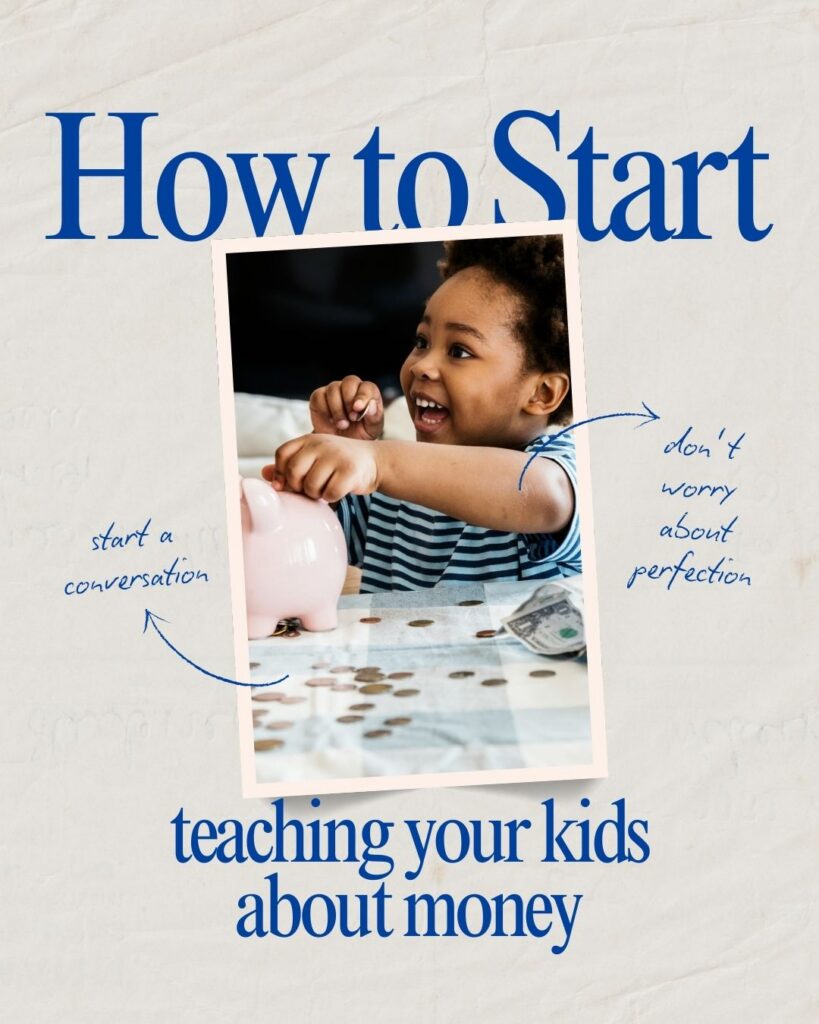
(Even If You’re Still Figuring It Out)
Most of us grew up in homes where money was either a source of tension or a subject nobody discussed at all. It paid the bills when there was enough, caused arguments when there wasn’t, and somewhere in between those two poles, it taught us that money was complicated, stressful, or maybe just not for people like us to think too hard about.
Now we have kids. And we want to do better.
But “doing better” is hard when you weren’t taught how. When your own relationship with money is still a work in progress. When you’re not sure you understand investing well enough to explain it to a seven-year-old.
Here is the thing most parents get wrong: you don’t have to be a financial expert to teach your kids about money. You have to be willing to start. The conversation itself — imperfect, uncertain, ongoing — is the lesson. What you’re really teaching your kids when you talk about money isn’t a set of facts. It’s a relationship with the subject. You’re showing them that money is something that can be understood, discussed, and managed. That it isn’t magic. That it isn’t shameful. That people figure it out.
That is the foundation most of us were never given. This is where it starts.
Why most parents don’t talk about money with their kids
There’s a specific kind of silence around money in a lot of families. Not hostile silence — just absence. Money comes in, money goes out, and the mechanics stay in the background like plumbing. Kids grow up knowing that money exists, that it pays for things, and that sometimes there isn’t enough of it. What they don’t grow up knowing is how any of it actually works.
Research on this is consistent. Most adults report that their parents rarely talked to them about financial topics. Most also say they wish they’d learned more about money before they were on their own, managing rent and credit cards and student loans with almost no preparation.
The reason parents don’t talk about it usually comes down to one of a few things: they don’t feel qualified, they’re uncomfortable with their own finances, or they genuinely don’t know where to start. All of those are understandable. None of them are good reasons to stay quiet.
Because here’s what the silence actually teaches your kids: money is complicated, uncomfortable, and not something ordinary people figure out. That lesson sticks. The absence of money conversations is itself a money lesson — just not a useful one.
You don’t need to have it all figured out
Let’s get the obvious thing out of the way: you do not need to be a financial planner, have a perfect credit score, or be debt-free to teach your kids about money. You need to be honest and you need to be willing to learn alongside them.
“I don’t know exactly how that works, but let’s figure it out together” is one of the most valuable sentences you can say to a kid about money. It models the mindset that matters most: that financial concepts are learnable, that adults ask questions, and that not knowing something is the beginning of finding out — not a reason to change the subject.
The most useful thing you can give your kids is not a list of facts about compound interest. It’s a healthy relationship with the topic. One where they grow up feeling like money is something they can understand and control, not something that happens to them.
How to Start to Teach Kids About Money
Earlier than most parents think. Children as young as three or four can understand the basic concept of exchange — you give something to get something. That’s the seed everything else grows from.
Here’s a rough guide by age:
Ages 3 to 5: The concept of exchange. Coins have value, prices exist, you can’t always have everything you want. Keep it simple and concrete. The grocery store is a classroom. So is any toy store where you’ve ever had to say no.
Ages 5 to 8: Earning, saving, and giving. This is where allowance systems start making sense. Kids this age can understand that money comes from work, that it can be saved for something bigger, and that some of it can go to others. The three-jar system — one for saving, one for spending, one for giving — works well here.
Ages 8 to 12: Budgeting and delayed gratification. Kids this age can track their own spending, set savings goals, and start to understand that every purchase is a trade-off. Buying a $20 thing today means not having that $20 for something else next week.
Ages 13 and up: The real stuff. Checking accounts, earning income, understanding debt, the basics of investing. Teenagers who understand compound interest before they get their first credit card are in a fundamentally different position than ones who don’t.
The ages are guidelines, not requirements. Start where your kid is, not where a chart says they should be.
Three conversations to have this week
You don’t need a curriculum or a scheduled “money lesson.” You need to start working money into the conversations you’re already having. Here are three that work for almost any age.
Where does money come from?
This sounds basic, but most kids don’t have a clear picture of the connection between work and money. Not just “Mom and Dad go to work,” but what that actually means. When you swipe a card at the grocery store, your kid sees a transaction — not the hours it represents. Making that connection visible is one of the most useful things you can do early.
Try this: “I worked about two hours to pay for this grocery run. That means these groceries cost two hours of my time.” It’s a small reframe, but it makes money tangible instead of abstract.
Why don’t we buy everything we want?
Every family with kids has this conversation eventually. Usually in a checkout line, usually under pressure. Having a proactive version of it — on a calm afternoon, not in a moment of conflict — changes it completely.
The most honest answer isn’t “we can’t afford it.” Often that isn’t strictly true — it’s that you’re making other choices with the money you have. A more useful answer: “We have a certain amount of money, and we make choices about what to do with it. If we bought everything that looked interesting, we’d run out before we got to the things that actually matter.”
That’s a harder conversation. It’s also a more truthful one, and kids can handle it better than we tend to assume.
What happens when you save instead of spend?
You don’t need compound interest formulas for an eight-year-old. You need one concrete example.
If your kid has been wanting something that costs $30 and they have $10, walk them through it: “If you put away $5 a week from your allowance, how long until you can buy it yourself?” Let them do the math. The number is the lesson. When they actually save the money and buy the thing themselves — that feeling of ownership, that delayed gratification paying off — does more for their relationship with money than almost any conversation.
The system that ties it all together
Conversations are how you start. A system is how it sticks.
The most reliable system for younger kids is the three-jar method: one jar for saving, one for spending, one for giving. When money comes in — allowance, a birthday gift, or money earned doing extra work — it gets divided between the three jars. The percentages matter less than the habit.
It does a few things at once. It makes money tangible and visible instead of abstract. It builds the automatic habit of not spending everything the moment it arrives. The giving component introduces the idea early that what you do with money isn’t purely about accumulating more of it.
As kids get older, the jars become categories in a real budget. The concept scales. The tools just change.
For the specifics on allowance — how much to pay, when to start, chore-tied versus unconditional — I cover that in a separate post. The short version: get started with something, even if it feels small. An imperfect allowance system running consistently beats a perfect one you’re still planning.
What to do when you don’t have the answer
At some point, your kid is going to ask you something about money that you genuinely don’t know. What is a stock? How does a mortgage work? Why do some people have so much more money than others?
Don’t fake it. Say: “I don’t know exactly, but let’s find out.” Then actually find out. Look it up together. The thing your kid absorbs from watching you engage with a question you don’t know the answer to — staying curious, seeking information, being willing to revise — is more valuable than any specific financial fact.
And if your own finances are a mess right now, or you’re carrying debt, or you’re still working through things yourself? That doesn’t disqualify you from this conversation. You can be honest about the process without giving your kids a reason to worry. “We made some choices with money that weren’t great, and we’re working on them” is a perfectly good thing to say. Kids learn from recovery just as much as from success.
This is the education most of us didn’t get
A lot of parents who want to raise financially literate kids are doing it because they grew up without that foundation themselves. They watched money cause tension in their household, or they stepped into adulthood without knowing how credit worked, or they spent years figuring out things they wish someone had explained earlier.
That experience isn’t a qualification problem. It’s a reason.
You know what the cost of financial silence is, because you’ve lived it. You’re not trying to raise a miniature investor. You’re trying to raise a kid who doesn’t start from zero — who gets a head start on something most people don’t figure out until they’re already dealing with the consequences.
That starts with a conversation. This week, not someday.